Top 18 beautiful russian models photo gallery Read this in other languages: Social Media Marketing Products Posts Jewelry Store Ads
A red–black tree is a kind of self-balancing binary search tree in computer science. Each node of the binary tree has an extra bit, and that bit is often interpreted as the color (red or black) of the node. These color bits are used to ensure the tree remains approximately balanced during insertions and deletions. Best Person Digital Mobile Game Cards Instagram Post Ideas
Balance is preserved by painting each node of the tree with one of two colors in a way that satisfies certain properties, which collectively constrain how unbalanced the tree can become in the worst case. When the tree is modified, the new tree is subsequently rearranged and repainted to restore the coloring properties. The properties are designed in such a way that this rearranging and recoloring can be performed efficiently. Read Newspaper Online
The balancing of the tree is not perfect, but it is good enough to allow it to guarantee searching in O(log n) time, where n is the total number of elements in the tree. The insertion and deletion operations, along with the tree rearrangement and recoloring, are also performed in O(log n) time. Gift Card Credit Ke
Examples Of Business Cards An example of a red–black tree: Future Launch Logo
Vechicle Launch Event 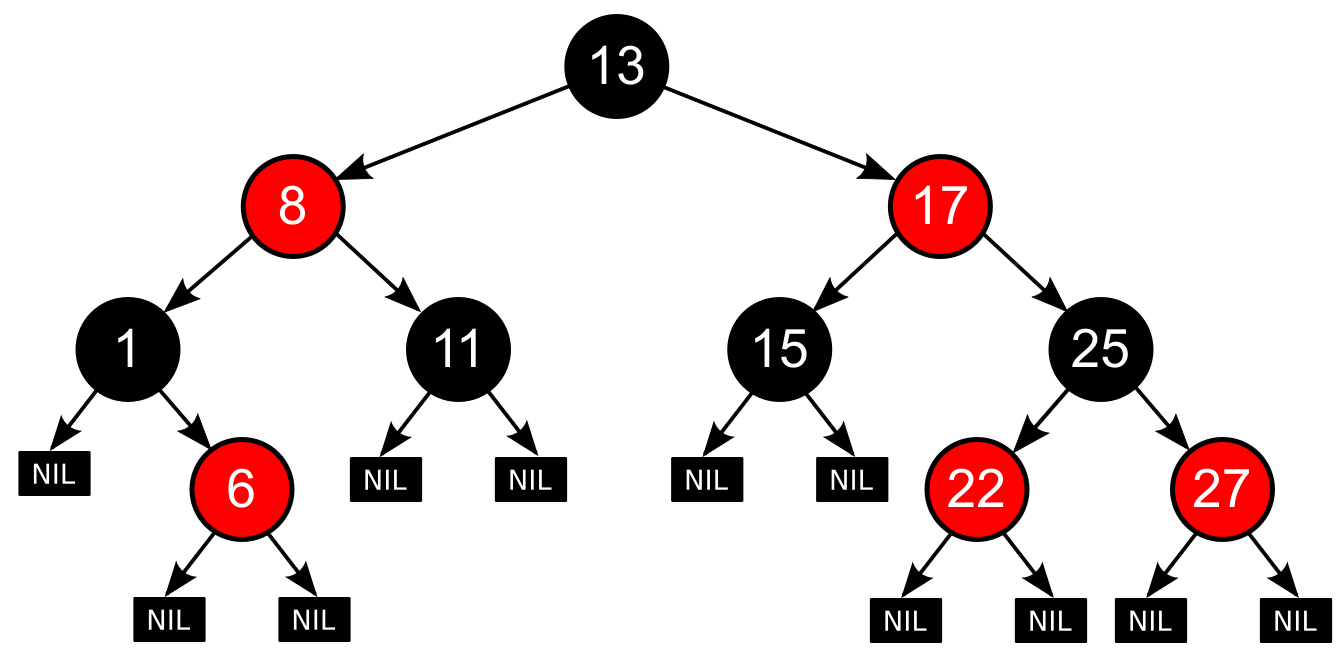
Programing Social Media Post In addition to the requirements imposed on a binary search tree the following must be satisfied by a red–black tree: Taxi Business Cards
- Each node is either red or black.
- The root is black. This rule is sometimes omitted. Since the root can always be changed from red to black, but not necessarily vice versa, this rule has little effect on analysis.
- All leaves (NIL) are black.
- If a node is red, then both its children are black.
- Every path from a given node to any of its descendant NIL nodes contains the same number of black nodes.
Safe Launch Plan Template Some definitions: the number of black nodes from the root to a node is the node's black depth; the uniform number of black nodes in all paths from root to the leaves is called the black-height of the red–black tree. Instagram Stories Quotes
Technology RoadMap Template These constraints enforce a critical property of red–black trees: the path from the root to the farthest leaf is no more than twice as long as the path from the root to the nearest leaf. The result is that the tree is roughly height-balanced. Since operations such as inserting, deleting, and finding values require worst-case time proportional to the height of the tree, this theoretical upper bound on the height allows red–black trees to be efficient in the worst case, unlike ordinary binary search trees. Most Popular Products XXL People
Product Highlights Background 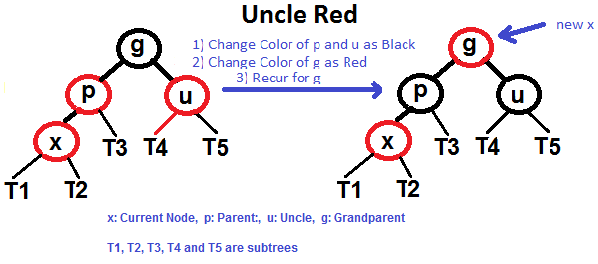
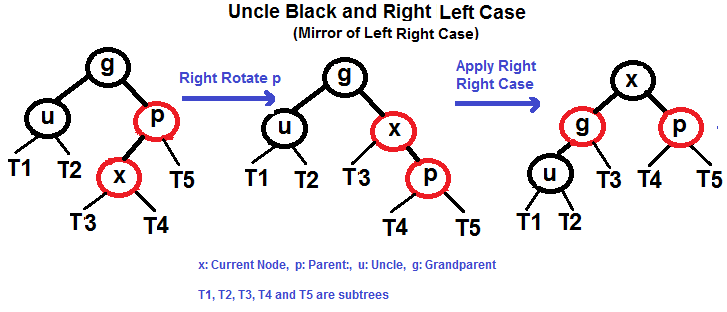
- Left Left Case (
pis left child ofgandxis left child ofp) - Left Right Case (
pis left child ofgandxis right child ofp) - Right Right Case (
pis right child ofgandxis right child ofp) - Right Left Case (
pis right child ofgandxis left child ofp)
Management Structure Analysis 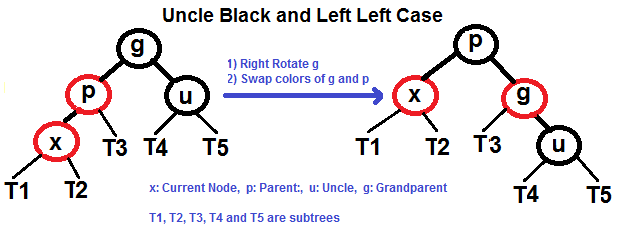
Tell Them Your Life Story Meme 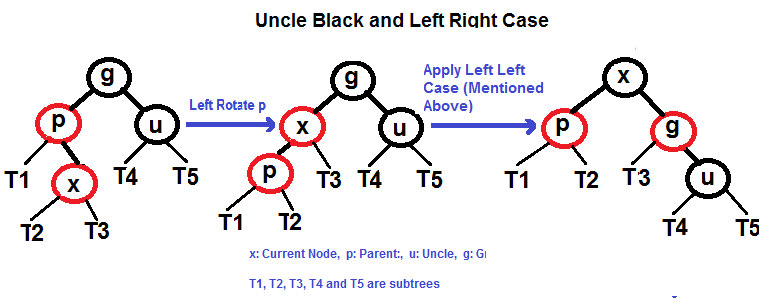
Credit Cards For Low Credit Scores 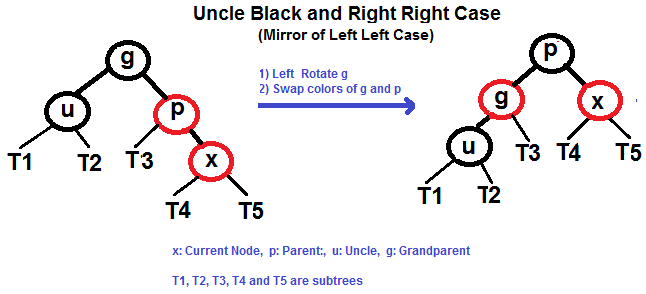
Story Behind The Post On Facebook